
In a bid to further the development of new-age cognitive applications, IBM announced new hybrid cloud all-flash storage solutions.

Hitachi Data Systems today unveiled a new flash-based enterprise storage lineup based on the next generation of the company's Hitachi Storage Virtualization Operating System, now at version 7.

Big Data storage specialist DataDirect Networks today unveiled a new high-end Lustre-based storage appliance designed specifically for high-performance computing and targeting data-intensive enterprises.

Hewlett Packard Enterprise announced an upgrade to its OneView tool, an infrastructure automation engine that provides software-defined intelligence across HPE servers, storage devices and other products.
With a mission to help organizations move from traditional file systems to more flexible, scalable cloud infrastructures, SwiftStack has upgraded its namesake "enterprise-ready object storage software."
Microsoft announced a GS-Series for enterprises using Azure VMs, adding more storage.
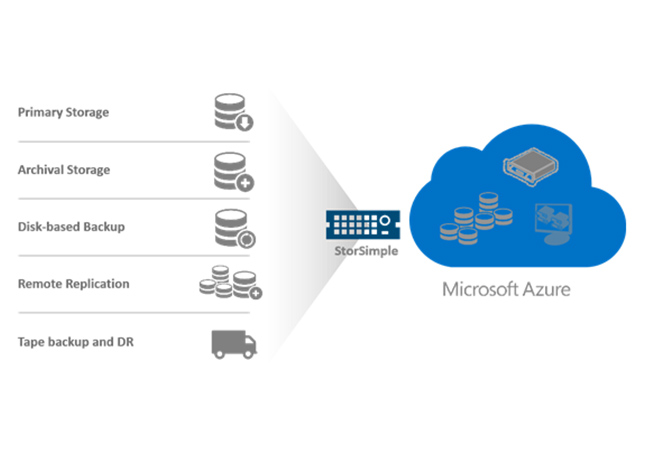
Microsoft announced this week a new line of its StorSimple appliances that link on-premises datacenters to the Azure cloud.

Here is what you can do to boost both the performance and amount of storage available in your enterprise.

While Fibre Channel provides enterprises with high-speed transfer rates, is the amount it offers a bit overkill?

Looking to make a move? Be sure to evaluate all the pros and the cons of cloud storage providers.

Here's a look at how full backups, incremental backups and differential backups differ when backing up enterprise data.

The market is now seeing the results of innovations in storage technology.

Here's what you need to know when it comes to input/output operations per second in physical storage.

While the technology is on the decline, here's why RAID is still sticking around as it slowly marches towards its ultimate demise.

Backing up data should extend further than just taking a "screenshot" of a drive.

The amount of data we're all generating at any given time is astronomical. Jump on the big-data train or risk getting left behind.

The blurring lines of storage and the industry terms used can leave enterprises evaluating their next storage buy puzzled. Here's a look at three phrases you need to know.

Cloud-based services are just one of the many options IT has when crafting their storage architecture.

Making a game plan before purchasing your storage solution will help to point you in the right direction.

Here's a look at the three top flash drive types.