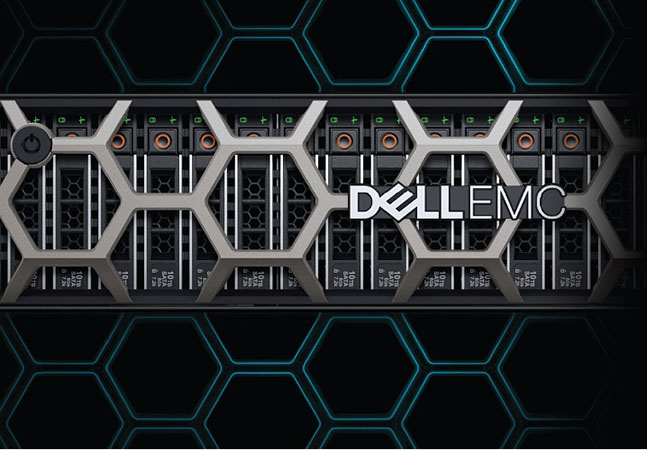
Dell has updated its lineup to handle the changing model of computing that can have files, storage, networking and compute anywhere.

Facebook will refresh its entire server hardware fleet, providing design specifications to the Open Compute Project Foundation.

Dell surpassed Hewlett Packard Enterprise in server shipments in the second quarter, according to new research from Gartner Inc., but HPE maintained its lead in server revenue.
Inspur launched its new family of InCloud 3000 hyperconverged server solutions for large and mid-sized datacenters at the recent Intel Developer Forum.
Fujitsu is incorporating high-performance Intel Xeon processors in a new line of PRIMEQUEST high-end servers positioned as alternative hardware choices for enterprises looking to migrate off UNIX systems to run mission-critical apps like ERP and databases.
To help enterprises gain actionable business insights from Big Data analytics, Intel has introduced a new family of high-performance Xeon processors to power servers boasting up to 24 cores and supporting up to 24 TB of memory.

Hewlett Packard Enterprise has added to its high-performance computing offerings, with new deep learning functionality, storage servers and targeted financial services industry applications.

Amid a growing overall market, demand for x86-based servers increased year over year in the fourth quarter of 2015, while non-x86 server revenue actually declined, according to new research from IDC.

Details emerge on the Power architecture IBM plan to use to beef up the cloud service it acquired last year.
If there were so many server platform updates in 2012, why are I/Os still held back?
From Live Migration to server core switching, we examine the key virtualization features of Windows Server 2012.
Even though Big Blue’s revenues shrank, its earnings increased last quarter.
Hardware migrations can be tricky. We discuss the keys to Kansas City Southern Railway's migration from mainframe to Linux.
For most organizations, choosing between Big Blue's two hybrid computing visions is simple, but what about shops that need both? That's where it gets tricky.
If IT's too costly, that's because it's too labor-intensive. IBM positions PureSystems as a focused effort to cut -- if not slash -- these labor costs.
Just because you can't name the last IBM i-specific security issue doesn't mean your IBM i platform is secure.
Given the success IBM has had with its RISC-Unix business, PowerLinux doesn't seem like a bad idea, but will its success come at the expense of AIX?
This month, Dell pulled the trigger on two significant acquisitions. What's behind Dell's acquisition moves, and why does at least one of them seem like a no-brainer?
The performance of IBM's Power Systems line was a bright spot in an otherwise turbulent server market, but the prospects for the Unix market as a whole look as bleak as ever.
Windows on the Big Blue's hardware is almost here.